Solar Panels: Smart Investment or Expensive Scam? What Homeowners Should Know in 2026
A realistic look at installation costs, electricity savings, hidden expenses, and whether solar panels are actually worth the money.
A realistic look at installation costs, electricity savings, hidden expenses, and whether solar panels are actually worth the money.
Solar panels have become one of the most talked-about home improvements in America. Installers promise lower electricity bills, greater energy independence, and long-term savings. Some advertisements even suggest homeowners can practically eliminate their electric bills.
But there is another side to the story.
Some homeowners spend tens of thousands of dollars on solar systems, only to discover that their savings are smaller than expected. Others face complicated financing agreements, additional utility charges, or years of payments before seeing a financial benefit.
So, are solar panels actually worth it, or are they an expensive investment that sounds better in a sales presentation than it does in real life?
The answer depends on several factors: installation costs, local electricity prices, sunlight exposure, utility policies, financing terms, and how long you plan to stay in your home.
Let's examine the numbers and find out when solar makes financial sense—and when it might not.
1. Why Are So Many Homeowners Considering Solar Panels?
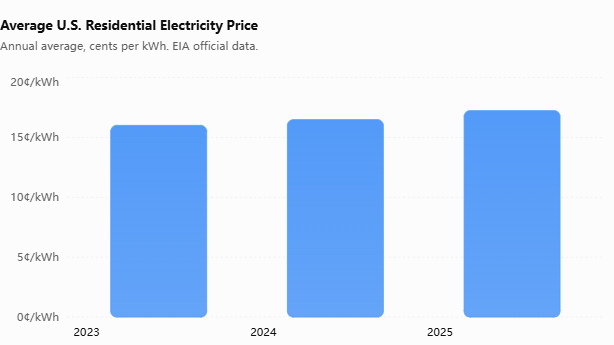
Electricity is becoming a more expensive part of household budgets.
According to the U.S. Energy Information Administration (EIA), the average residential electricity price reached 17.23 cents per kilowatt-hour in 2025, compared with 16.48 cents in 2024. That's an increase of approximately 4.6% in one year.
For households that use electricity for air conditioning, heating, laundry, cooking, and everyday appliances, even a small increase in electricity rates can add up.
Consider a household using 1,000 kWh per month.
At the 2025 national average rate, its electricity consumption would represent approximately $172.30 per month in energy charges, before fixed fees, taxes, and other adjustments.
That is more than $2,000 annually.
This is why solar panels attract attention. Instead of purchasing all their electricity from a utility company, homeowners can generate some of their own power.
However, producing electricity is not the same as eliminating an electric bill. Understanding that difference is essential before making a purchase.
2. How Much Do Solar Panels Actually Cost in 2026?
The biggest concern for most homeowners is the initial investment.
Solar installation prices vary depending on system size, location, roof design, equipment, labor, and electrical requirements.
According to EnergySage's first-half 2026 marketplace data, the median solar price reached approximately $2.57 per watt before incentives.
Here is what that price means for different system sizes:
|
System Size |
Illustrative Installation Cost |
|
5 kW |
$12,850 |
|
8 kW |
$20,560 |
|
10 kW |
$25,700 |
|
12 kW |
$30,840 |
These figures are calculated using the $2.57/W benchmark. They are illustrative estimates, not guaranteed quotes or universal installation prices.
A larger system generally produces more electricity, but it also requires a larger initial investment.
What Are You Actually Paying For?
Many people assume most of the installation price goes toward the solar panels themselves.
In reality, a residential solar system includes several components:
- Solar panels that convert sunlight into electricity.
- Inverters that convert electricity into a usable form for the home.
- Mounting equipment that secures the panels to the roof.
- Electrical wiring and installation labor.
- Permits, inspections, and grid interconnection work.
The inverter, electrical work, mounting equipment, and labor all contribute to the final price.
This is why comparing solar panels by their advertised retail price alone can be misleading.
Two companies might offer similar panels but quote significantly different total installation prices.
Why Can Two Homeowners Receive Very Different Quotes?
Several factors influence the final price:
Roof condition: Older roofs may need repairs or replacement before installation.
Roof design: Complex rooflines, steep slopes, and difficult access can increase labor costs.
System size: Larger systems can have lower costs per watt, although the total price is higher.
Equipment selection: Premium panels, inverters, and monitoring systems may increase the initial investment.
Local installation market: Labor costs, permitting requirements, and installer competition vary by state and city.
Before accepting an offer, homeowners should understand exactly what is included in the quoted price.
3. How Much Money Can Solar Panels Actually Save?
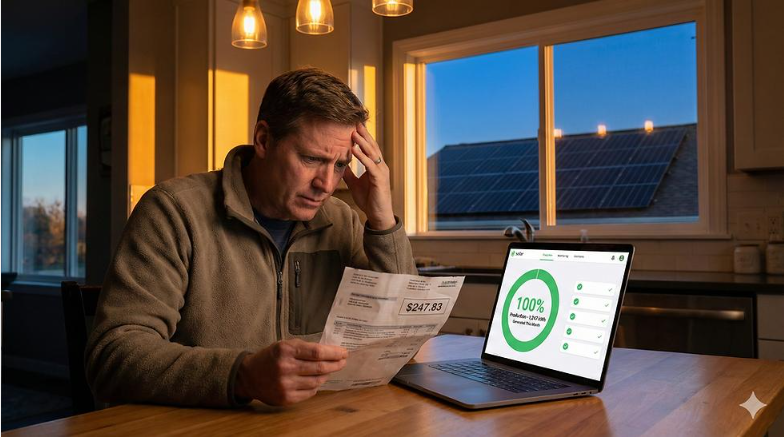
This is where the discussion becomes more interesting.
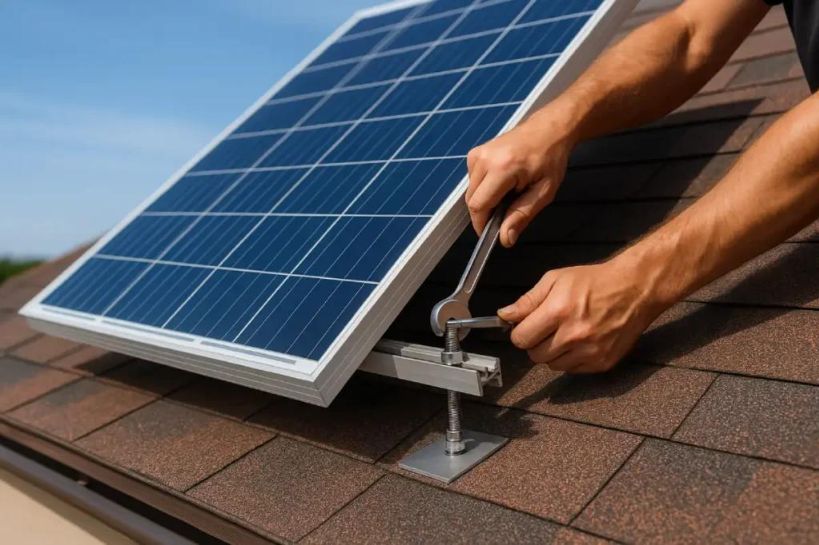
Solar panels do not automatically eliminate your electricity bill. They reduce the amount of electricity you need to purchase from the utility company.
Your actual savings depend on how much electricity your system produces, how much of that electricity your household uses, and how your utility company credits excess electricity sent back to the grid.
For example, imagine a household that uses most of its electricity during daylight hours.
Solar panels may directly supply a significant portion of that daytime demand.
But a household that consumes most of its electricity at night may need battery storage or a favorable utility export-credit arrangement to maximize the value of its solar production.
The Difference Between Electricity Production and Electricity Savings
These two numbers are not interchangeable.
A system might produce 10,000 kWh annually, but that does not mean the homeowner avoids paying for 10,000 kWh at the full retail electricity rate.
Why?
Because some electricity may be exported to the grid at a lower compensation rate. The household may also continue paying fixed utility charges.
For this reason, an installer should provide a projected annual electricity production estimate and explain how much of that production is expected to offset your actual utility bill.
A realistic savings estimate should also account for your utility's current net-metering or net-billing rules.
4. How Long Does It Take for Solar Panels to Pay for Themselves?
The payback period is one of the most important numbers to examine.
It represents the amount of time required for cumulative electricity savings to recover the initial investment.
According to EnergySage's marketplace report, the average estimated solar payback period increased from 7.4 years in the third quarter of 2025 to approximately 10.4 years in the fourth quarter of 2025, excluding the federal residential tax credit.
That change reflects the impact of the federal incentive expiration on homeowner economics.
However, a 10.4-year marketplace estimate does not mean every household will recover its investment in that amount of time.
Your actual payback period may be shorter or longer.
A Simple Payback Calculation
The basic formula is:
Payback Period = Net Initial Investment ÷ Annual Electricity Bill Savings
For example, suppose a homeowner receives a $25,700 solar installation quote.
If the system produces $2,500 in annual electricity bill savings, the simple payback calculation would be:
$25,700 ÷ $2,500 = 10.28 years.
This is an illustrative calculation, not a forecast for a typical American household.
It does not account for financing interest, maintenance, inverter replacement, utility fees, electricity price changes, or the time value of money.
Those factors can change the actual financial outcome.
5. The Hidden Costs That Solar Advertisements Don't Always Explain
A solar system may look affordable in an advertisement, but the total financial commitment can be more complicated.
Here are some expenses homeowners should investigate.
Roof Repairs and Replacement
Solar panels are designed to remain installed for many years.
If your roof needs replacement shortly after installation, removing and reinstalling the solar equipment may create additional expenses.
It is worth checking the roof's remaining useful life before signing a contract.
Inverter Replacement
Solar panels and inverters do not necessarily have the same lifespan.
An inverter may need replacement before the panels themselves reach the end of their useful life.
Ask about the equipment warranty, labor coverage, and replacement costs.
Financing Fees and Interest
A zero-down solar offer does not mean the system is free.
Some financing agreements include dealer fees, interest charges, escalators, or other costs that can increase the total amount paid.
The monthly payment alone does not tell you whether the deal is financially attractive.
Utility Connection Charges
Even after installing solar panels, some utility companies continue charging monthly service fees.
Depending on local policies, homeowners may also pay for electricity consumed at night or during periods of insufficient solar production.
A solar system can lower your bill without eliminating it.
6. Buying Solar Panels vs. Leasing: Which Is Better?
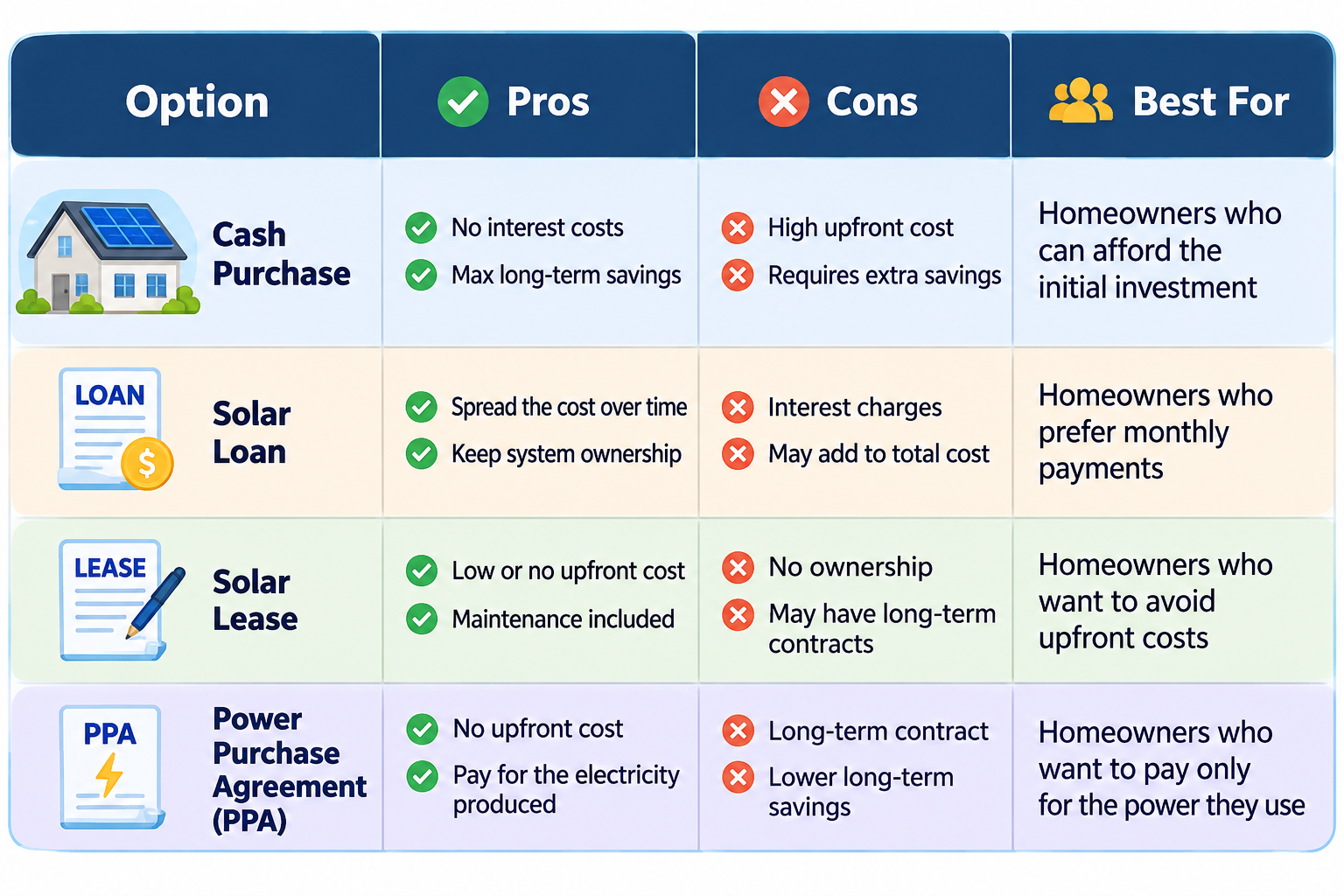
Not every homeowner needs to purchase a solar system outright.
There are several ways to access residential solar.
A cash purchase may provide more control over the equipment and long-term economics, but requires substantial upfront capital.
A solar loan spreads the cost over time, although financing expenses can reduce the financial benefit.
Leases and PPAs may reduce upfront costs, but homeowners need to understand who owns the equipment, who receives applicable incentives, and what happens when the property is sold.
The cheapest monthly payment is not necessarily the cheapest overall deal.
7. Is the Federal Solar Tax Credit Still Available in 2026?
This is an important change that homeowners need to understand.
For many years, the federal residential clean energy tax credit allowed eligible homeowners to claim a credit equal to 30% of qualifying solar installation expenditures.
However, under the changes enacted in 2025, the residential clean energy credit under Section 25D is no longer available for qualifying expenditures made after December 31, 2025.
That means homeowners installing a purchased residential solar system in 2026 should not assume they can still claim the old 30% federal tax credit.
This changes the financial calculation.
For example, a homeowner should not automatically subtract 30% from a $25,700 installation quote when estimating the cost of a new system in 2026.
Some state, local, and utility incentives may still be available, depending on where the property is located.
Third-party-owned solar arrangements may also have different incentive rules. However, homeowners should not assume that a tax benefit received by a solar provider will automatically be passed on to them.
Always verify current eligibility and contract terms before relying on an advertised incentive.
8. Who Benefits Most From Installing Solar Panels?
Solar panels are not equally attractive for every household.
Some homes have favorable conditions that make solar a potentially strong long-term investment.
Others may struggle to recover their installation costs.
Solar May Make More Financial Sense If:
- Your household has relatively high electricity consumption.
- Your local electricity rates are high.
- Your roof receives substantial direct sunlight.
- Your roof is in good condition.
- Your utility offers favorable compensation for excess solar electricity.
- You expect to remain in the property long enough to benefit from the system.
Solar May Be Less Attractive If:
- Your household uses relatively little electricity.
- Your roof receives substantial shade.
- Your roof needs replacement soon.
- Your utility provides very low compensation for exported electricity.
- Your financing agreement includes expensive fees.
- You plan to move before the system is likely to pay for itself.
There is no single installation price or savings estimate that works for every American home.
A homeowner in a high-electricity-cost area may have a very different financial outcome from someone in an area with relatively cheap electricity.
9. Seven Questions to Ask Before Signing a Solar Contract
Before committing to an installation, ask the company these questions:
- What is the total installed price, including permits and electrical work?
- How much electricity is the system expected to produce annually?
- What assumptions were used to calculate my projected savings?
- How does my utility compensate me for excess electricity?
- What are the equipment, workmanship, and roof warranties?
- Are there financing fees, annual payment increases, or additional charges?
- What happens to the contract if I sell my home?
You should also obtain multiple written quotes.
EnergySage's second-half 2025 marketplace report found a meaningful difference between the highest and lowest average quotes received by shoppers. For a typical 11.8 kW system, the price difference could represent thousands of dollars.
Comparing multiple proposals can help homeowners understand whether an offer is competitive.
Do not choose an installer solely because its advertised monthly payment looks attractive.
10. So, Are Solar Panels a Smart Investment or a Waste of Money?
After looking at installation costs, electricity prices, financing, and payback periods, the answer is not simply yes or no.
Solar panels are neither automatically a great investment nor automatically a scam.
They are a financial decision that depends heavily on the individual property and the terms of the installation agreement.
For homeowners with high electricity bills, suitable roofs, competitive installation quotes, and favorable utility policies, solar can provide meaningful long-term savings.
For households with low electricity consumption, expensive financing, unfavorable export rates, or major roof problems, the numbers may not work as well.
The biggest mistake is assuming that every solar installation will eliminate electricity bills or pay for itself within a specific number of years.
The better approach is to calculate your own expected savings before signing anything.
Before Making a Decision, Check These Three Things
1. Your current electricity costs
Look at your last 12 months of utility bills. Identify your average monthly consumption and the price you pay per kWh.
2. Your home's solar potential
Consider roof direction, shading, roof condition, and available installation space.
3. Your local installation and utility options
Compare several quotes and ask your utility company about net metering, export credits, fixed charges, and other applicable policies.
A solar system should make financial sense on paper before it becomes a permanent part of your home.
Final Thoughts
Solar panels can be a smart way to manage long-term household energy costs, but the economics are more complicated than many advertisements suggest.
The installation price is only the beginning.
Electricity rates, financing terms, utility policies, maintenance, and the time you expect to stay in your home all influence the final result.
The real question is not whether solar panels are good or bad.
It is whether the numbers make sense for your home.
Take the time to compare your options, understand the contract, and calculate the expected payback period.
A well-informed decision can save you money. A rushed decision could leave you paying for a system that never delivers the savings you expected.
Disclaimer: This article provides general educational information, not personalized financial, tax, or electrical advice. Solar installation prices, incentives, utility policies, and projected savings vary by location and household. Verify current information with your utility company, qualified installers, and relevant government agencies before making a decision.
Sources and Data References
- U.S. Energy Information Administration (EIA), Electric Power Annual, 2025 residential electricity prices.
- EnergySage, 23rd Home Electrification Marketplace Report, H1 2026.
- EnergySage, 22nd Home Electrification Marketplace Report, H2 2025.
- Lawrence Berkeley National Laboratory, U.S. Distributed Solar and Storage Data: 2025 Update.
- Internal Revenue Service (IRS), Section 25D Clean Energy Credit FAQs, 2025.
About Us
At knownsearch, we publish engaging content that brings useful insights and meaningful information together in one place.
Our platform covers a wide range of topics, offering practical insights that make everyday information more accessible and enjoyable.
Our mission is to present content in a clear, organized, and user-friendly way. We strive to provide a seamless experience where visitors can easily navigate topics, compare ideas, and find helpful information that fits their interests.